
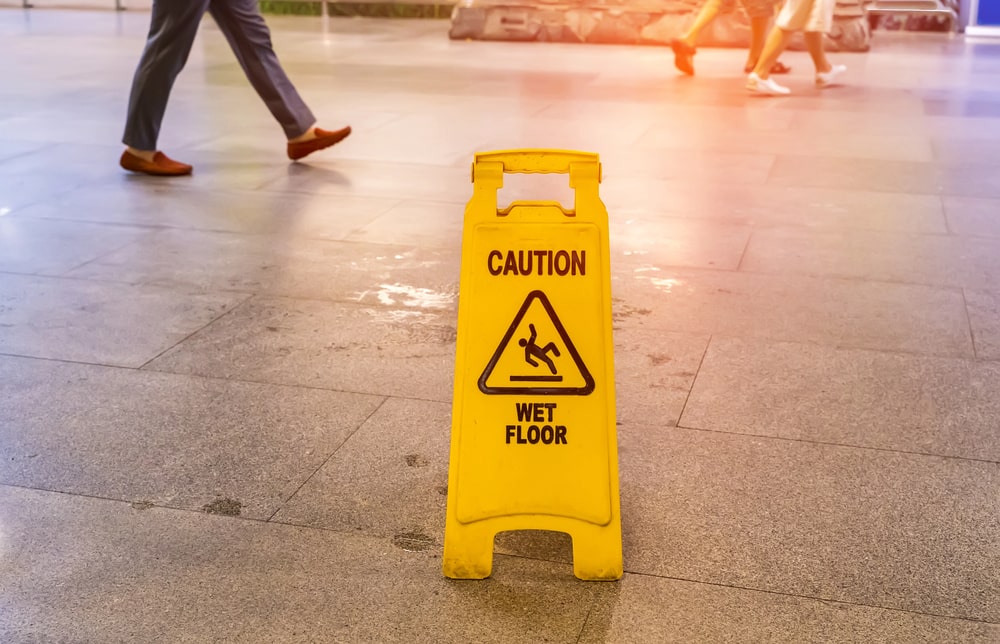
Yellow wet floor signs have become ubiquitous in commercial properties, standing as bright warnings that surfaces ahead are slippery. When you slip and fall on a wet floor without seeing any warning signs, it seems obvious that the property owner was negligent. The legal reality is more complicated. Understanding when wet floor signs are actually required and how their absence affects liability helps you evaluate whether you have a valid premises liability claim.
A slip and fall lawyer handling these cases knows that the presence or absence of warning signs is just one factor among many in determining whether owners met their duties to keep premises safe.
What Wet Floor Signs Actually Do
Wet floor signs serve as warnings that temporary slippery conditions exist. They alert visitors to exercise extra caution in specific areas where floors are wet from mopping, spills, leaks, or tracked-in water.
The signs themselves don’t make floors safe. They simply warn about dangers that property owners cannot immediately eliminate. This distinction matters because warning about hazards doesn’t fulfill the primary duty to maintain safe conditions in the first place.
Property owners must clean up spills and address wet floor conditions promptly. Warning signs buy time for cleaning but don’t replace the obligation to dry floors and restore safe conditions reasonably quickly.
When Warning Signs Are Legally Required
No universal law mandates wet floor signs in every situation involving moisture. Instead, property owners must provide adequate warnings when hazards cannot be immediately eliminated and aren’t obvious to visitors.
The analysis involves two questions: Is the wet condition obvious without a warning? Can the owner remove the hazard quickly or must it remain for a period? If conditions aren’t obvious and will persist for some time, warnings become necessary.
Freshly mopped floors in well-lit areas with visible wetness may be obvious without signs in some circumstances. Hidden puddles in dim areas or clear water on shiny floors that looks dry definitely require warnings because visitors cannot easily see the danger.
The Inadequate Warning Sign Problem
Simply placing wet floor signs somewhere in the general vicinity doesn’t satisfy warning duties. Signs must be positioned where visitors will see them before encountering the wet surface.
We see cases where property owners placed signs behind or beside wet areas, making them visible only after people already stepped on slippery floors. These placements fail to provide effective warnings because visitors have already encountered the hazard before seeing the caution.
Sign quantity matters too. Large wet areas need multiple signs positioned to warn people approaching from different directions. A single sign at one entrance doesn’t protect visitors entering from other directions.
When Signs Don’t Eliminate Liability
The presence of wet floor signs doesn’t automatically shield property owners from liability. Signs serve as one safety measure, but owners still bear duties to act reasonably in addressing the underlying hazard.
If floors remain wet for hours with only warning signs present, owners may be negligent for failing to dry them within reasonable time. Warnings allow temporary delays for cleaning but don’t excuse indefinite maintenance of dangerous conditions.
Property owners sometimes use warning signs as substitutes for actually addressing hazards. Permanently wet entryways from leaking roofs shouldn’t just have perpetual warning signs. Owners must fix the leaks causing ongoing moisture problems.
The Open And Obvious Defense
Property owners argue that obviously wet floors don’t require warning signs because reasonable people can see the hazard themselves. This defense applies when wetness is clearly visible to anyone paying attention.
Shiny wet floors under good lighting with puddles or visible moisture may be open and obvious. Dark floors with thin water layers that look dry, or wet floors in dim lighting, are not obviously dangerous.
Open and obvious doesn’t automatically bar recovery in all jurisdictions. Some states allow recovery even when hazards were obvious if property owners should have eliminated them or if circumstances distracted visitors from noticing obvious conditions.
Comparative Negligence And Warning Signs
The absence of wet floor signs affects comparative negligence analysis when property owners claim visitors should have been more careful. Without signs, arguing you should have anticipated slippery conditions becomes harder for defendants.
Conversely, when signs are present but you didn’t see them or ignored them, property owners assign you higher fault percentages. They argue reasonable people heed warnings and you assumed risk by proceeding despite notice.
We counter these arguments by showing signs were inadequately placed, poorly maintained, or that legitimate distractions prevented you from seeing warnings positioned reasonably.
Industry Standards For Warning Signs
While no universal legal requirement mandates specific wet floor sign standards, industry best practices exist for sign design, placement, and maintenance. Violations of these standards help prove inadequate warnings.
Effective warning signs should be:
- Bright yellow with clear “Caution” or “Wet Floor” text
- Positioned before visitors reach wet areas
- Stable and unlikely to tip over or blow away
- Multiple if the wet area is large or has several approaches
- Visible from normal walking sight lines
Signs that don’t meet these standards may not constitute adequate warnings even when technically present.
The Timing Question
When property owners discover spills or wet conditions affects whether warning sign absence constitutes negligence. Owners who just learned about moisture and are gathering cleaning supplies may reasonably not have signs placed yet.
Wet conditions that existed for extended periods without warnings demonstrate clear negligence. The timing analysis requires proving how long the hazard was present before you fell.
Dried edges, tracking patterns, and debris in water help establish that wet conditions weren’t fresh. Property owners cannot claim they just discovered the hazard when evidence shows it existed for substantial time.
Different Types Of Wet Conditions
The source and nature of wetness affects whether warning signs were appropriate. Some wet floor scenarios involve predictable moisture that property owners should anticipate and address systematically.
Entryways during rain or snow create foreseeable wet conditions. Property owners should have mats, warning signs, and rapid response systems for tracked-in moisture during inclement weather. Failure to implement these measures shows negligence regardless of whether specific warnings existed when you fell.
Unexpected spills from customers or leaks from equipment may justify brief periods without warnings while owners discover and respond to conditions. Even then, reasonable inspection intervals should catch most hazards before they cause injuries.
Maintenance And Sign Condition
Faded, damaged, or fallen wet floor signs don’t provide adequate warnings even when technically present. Property owners must maintain signs in visible, readable condition.
We photograph warning sign conditions after accidents to show whether they were actually effective. Signs knocked over, tucked in corners, or so worn that text is illegible don’t satisfy warning duties.
Multiple Warnings And Excessive Sign Use
Some properties post so many permanent warning signs that they become background noise visitors ignore. Generic “Caution” signs throughout a store lose effectiveness when visitors see dozens daily.
Specific warnings about actual current hazards work better than generic signs posted everywhere as liability shields. We argue that property owners who over-use signs create warning fatigue that reduces effectiveness of all signs.
What Signs Don’t Excuse
Warning signs never excuse property owners from basic maintenance duties. Broken tiles causing water pooling, leaking pipes, inadequate drainage, and structural problems creating wet floors all represent maintenance failures that warnings cannot remedy.
When underlying property defects cause persistent wet conditions, owners must fix the problems rather than permanently warning about them. Your slip and fall on water caused by property defects remains the owner’s responsibility even with warning signs present.
Language And Symbol Considerations
Effective warnings must communicate to all visitors, including those who don’t read English. Many wet floor signs use pictograms showing slipping figures that transcend language barriers.
Text-only signs in English may not provide adequate warnings in diverse communities. When property owners market to non-English speakers, their warnings should accommodate that audience through symbols or multiple languages.
Proving Sign Absence
Documenting that no wet floor signs existed at the time of your accident requires immediate evidence collection. By the time you investigate later, owners may have placed signs and claim they were always there.
Photographs immediately after falls, witness statements, and your own contemporaneous notes help prove warning sign absence. Security footage sometimes shows the area before your fall, confirming no signs were present.
If you slipped on a wet floor without warning signs, don’t assume their absence automatically makes the property owner liable or that their presence would have eliminated your claim. The legal significance of wet floor signs depends on numerous factors including how obvious the wetness was, whether signs would have helped you avoid the hazard, and whether the owner’s primary duty was to dry the floor rather than warn about it. Understanding these nuances helps you evaluate your premises liability claim realistically and pursue fair compensation when property owners failed to meet their safety obligations.